
This is a regular feature for paid subscribers wherein I write a little bit about what I’ve been reading and/or watching.
If you’re not yet a paid subscriber but regularly read, enjoy, or share Unpopular Front, please consider signing up. This newsletter is completely reader-supported and represents my primary source of income. And, at 5 dollars a month, it’s less than most things at Starbucks.
When the Clock Broke is now out in paperback and available wherever books are sold. If you live in the United Kingdom, it’s also available there. The UK edition is also apparently available all over the world, too! I’ve received reports now of book sightings in places as far as Kuala Lumpur, Malaysia, and Christchurch, New Zealand. It seems relatively easy to find in Commonwealth countries and at English-language bookstores abroad.
I also do a film podcast with Jamelle Bouie of The New York Times. On our Patreon, we have a lot of bonus content, including a weekly politics discussion.
Reminder: I will be coming to the UK to give a talk at King’s College London on March 26th! I’m given to understand that the space is filling up fast, so click here to see the details and reserve a (free) spot.
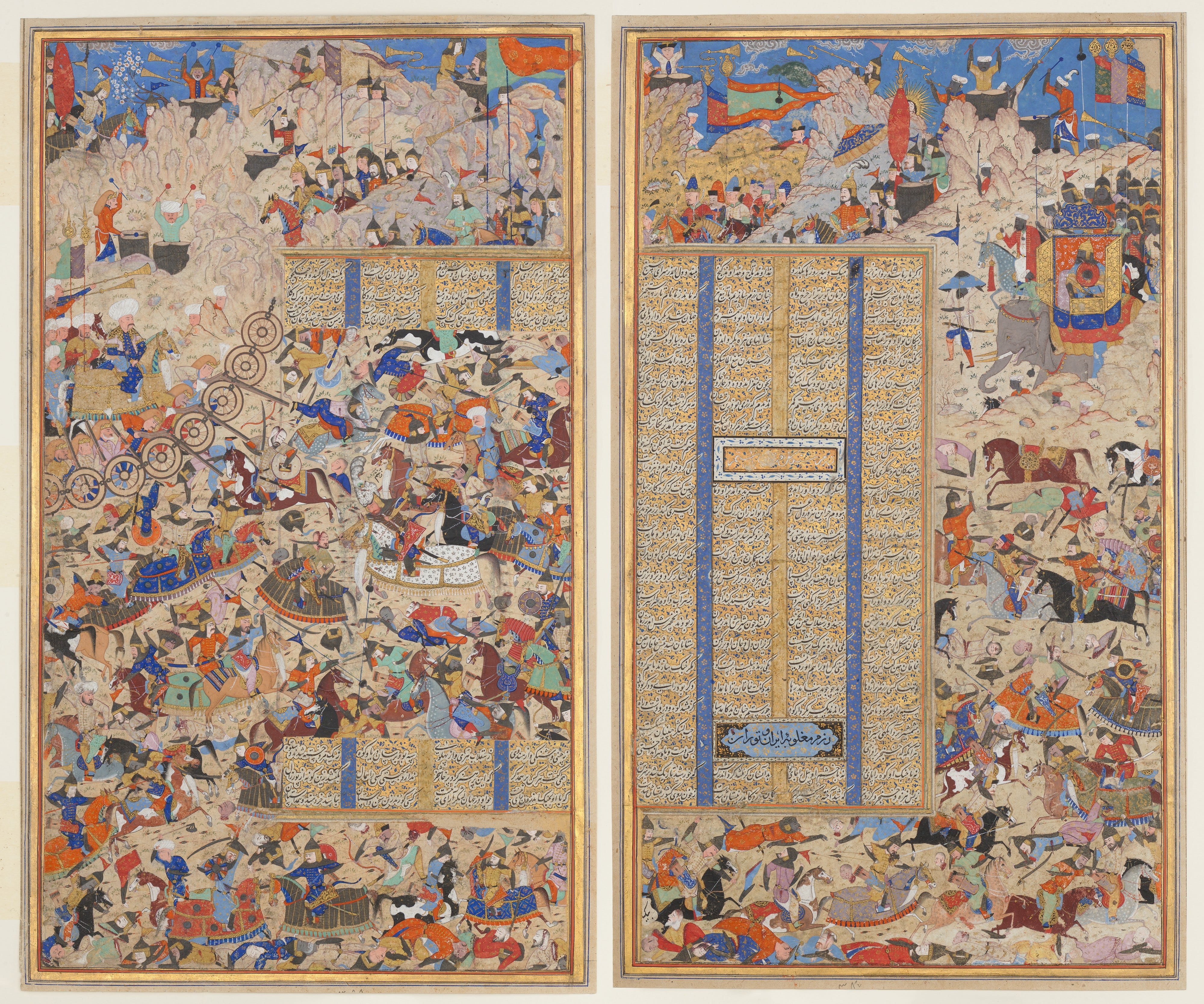
All my reading this week is about Iran.
First, from that nation’s—and perhaps the world’s—greatest poet, Hafiz, on a very different kind of war.
“You Were Brave in That Holy War”
You have done well
In the contest of madness.
You were brave in that holy war
You have all the honorable wounds
Of one who has tried to find love
Where the Beautiful Bird
Does not drink
May I speak to you
Like we are close
And locked away together?
Once I found a stray kitten
And I used to soak my fingers
In warm milk;
It came to think I was five mothers
On one hand.
Wayfarer,
Why not rest your tired body?
Lean back and close your eyes.
Come morning
I will kneel by your side and feed you.
I will so gently
Spread open your mouth
And let you taste something of my
Sacred mind and life
Surely
There is something wrong
With your ideas of
God
O, surely there is something wrong
With your ideas of
God
If you think
Our Beloved would not be so
Tender
Interpreted by Daniel Ladinsky.
In The New Left Review, an interview with historian Ervand Abrahamian from a couple of weeks before the war began:
To return to the question of sanctions: what effect has this external economic coercion had on the Islamic Republic’s support base?
The sanctions have devastated the salaried middle class, especially in the past five years. People working in the public-sector administration, who would normally be broadly supportive of the regime, have been economically decimated. The poorer classes have been reduced almost to starvation-level poverty. The sanctions probably worsened the impact of the pandemic, which helped to reveal the problems; they meant that Iran couldn’t get medical help from Europe, and some of its vaccines were probably not as good as Western ones. But so far, unlike in 1978–79, there haven’t been public-sector strikes among civil servants, protesting against the regime. Whether that will come, I’m not sure, but there must be a lot of economic resentment.
The regime still has real roots in society, though its base is smaller now. This is essentially a petit-bourgeois or lower-middle-class regime and that class element is still strong, including in the rural sector. However unpopular the regime may be in general, it still has the support of that significant layer, strongly represented in the Revolutionary Guards. Many of the religious ideologues, those willing to kill, come from lower-middle-class families. As long as that social base exists, I think the regime is fairly secure. It won’t flinch from bloodshed. It will fight tooth and nail to survive. The devastating economic situation and escalating geopolitical tensions have intertwined with the hardening outlook of the regime, its foreclosing of any parliamentary-reform option, its garrison-state mentality, in ways that are very difficult to untangle. There’s a Persian term: one of us, or not one of us. That ‘us’ has become narrower and narrower, the result of thirty years of salami-slicing; the only people who can be trusted are regime insiders. It’s a classic no-way-out.
….
How should the current round of negotiations with the Americans be understood?
Here again, the American position doesn’t make sense. As Khamenei says, you give them one demand, they ask for another. So, what’s the bottom line? They said the missiles were a major threat. But during the Twelve-Day War, only 5 per cent of missiles got through and Israel will be better prepared now. So how important are missiles? Are they just a way of forcing Iran to submit? Again, the so-called proxies were supposed to pose a threat to the whole Middle East. But Hezbollah has been pretty much dismantled. The much smaller militias in Iraq have been silent. So why focus on them? That’s why, when these demands are made, one wonders what else Israel wants.
Trump has spoken openly about regime change—a euphemism for coup d’état, though that term is now out of fashion. But it still means some armed force, usually a section of the military, seizing power. The trouble with the Iranian situation is that the military is thoroughly penetrated by the irgc, which is more extreme than the clerics. The Americans and Israelis may think that somehow someone from inside will take over, but that person will almost certainly turn out to be a Revolutionary Guard. They must know, too, that the Pahlavis are not going to be returned unless there are American boots on the ground. That’s why I keep thinking that, if you put yourself in the shoes of Netanyahu or Trump, logically, knowing there can’t really be a regime change, they must be thinking of doing what was done to Iraq, Syria and Libya—breaking up the state.
