
This is a regular feature for paid subscribers wherein I write a little bit about what I’ve been reading and/or watching.
If you’re not yet a paid subscriber but regularly read, enjoy, or share Unpopular Front, please consider signing up. This newsletter is completely reader-supported and represents my primary source of income. And, at 5 dollars a month, it’s less than most things at Starbucks.
When the Clock Broke is now out in paperback and available wherever books are sold. If you live in the United Kingdom, it’s also available there. The UK edition is also apparently available all over the world, too! I’ve received reports now of book sightings in places as far as Kuala Lumpur, Malaysia, and Christchurch, New Zealand. It seems relatively easy to find in Commonwealth countries and at English-language bookstores abroad.
I also do a film podcast with Jamelle Bouie of The New York Times. On our Patreon, we have a lot of bonus content, including a weekly politics discussion.
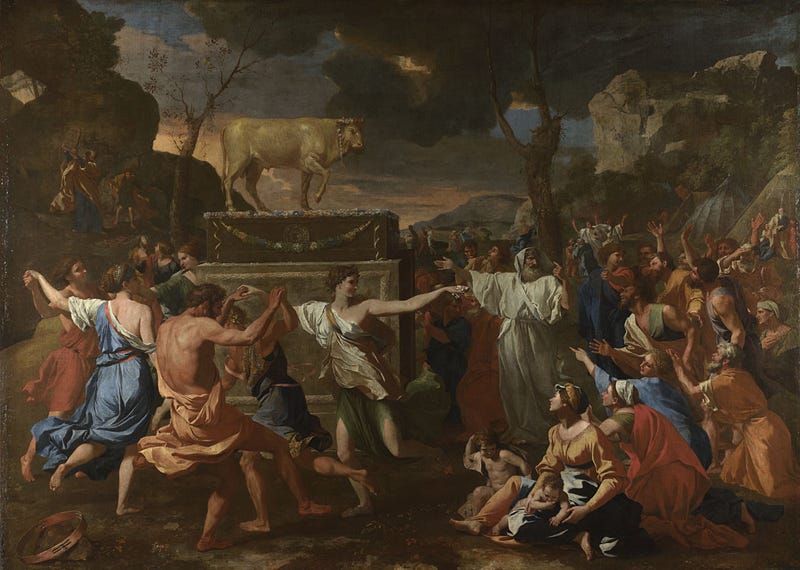
Happy Easter and Chag Sameach Pesach to all who celebrate.
Thanks to everyone who came to the Night of Ideas festival at Albertine to see me, Max Read, and Maya Vinokour. I will have video and audio of the event up tomorrow, I think.
I’m focusing today on a single theme: Trump’s threats to bomb Iran back into the “stone ages [sic.]” Sometimes I feel that my job is to be an intellectual historian of idiocy. One might think that there’s no discipline less helpful to understand Trumpism than the history of ideas or culture, since Trump has neither, but as John Maynard Keynes once remarked, “Madmen in authority, who hear voices in the air, are distilling their frenzy from some academic scribbler of a few years back.”
The phrase “bomb them into the Stone Age” is a ghastly cliché, and so Trump and Hegseth probably just plucked it out of the air, but the actual origins are still instructive. It comes not from an academic scribber, but from Air Force General Curtis LeMay, the mastermind of the fire-bombing campaign that devastated Japan’s cities in World War II. He later served as head of the Strategic Air Command and Air Force Chief of Staff under John F. Kennedy, where he continually advised the President to initiate a preemptive nuclear strike during the Cuban Missile Crisis. He also appears to have taken actions that were designed to provoke the Soviet Union into World War III. He was the model for George C. Scott’s character in Stanley Kubrick’s Doctor Strangelove and ran as segregationist George Wallace’s VP candidate on the American Independent Party ticket in 1968.
The New Yorker has a great piece by Richard Rhodes on LeMay’s efforts to start WWIII:
In 1954, LeMay remarked to a reconnaissance pilot whose plane had been damaged by a MiG-17 while over the Soviet Union, “Well, maybe if we do this overflight right, we can get World War III started.” The pilot, Hal Austin, told the documentary filmmaker Paul Lashmar that he assumed LeMay was joking, but years later, after LeMay retired, Austin saw him again and “brought up the subject of the mission we had flown. And he remembered it like it was yesterday. We chatted about it a little bit. His comment again was, ‘Well, we’d have been a hell of a lot better off if we’d got World War III started in those days.’ ”
The “Stone Age” quote appears in his 1965 autobiography, Mission with LeMay: My Story. The context is the burgeoning Vietnam War:
The military task confronting us is to make it so expensive for the North Vietnamese that they will stop their aggression against South Viet Nam and Laos. If we make it too expensive for them, they will stop. They don’t want to lose everything they have.
There came a time when the Nazis threw the towel into the ring. Same way with the Japanese. We didn’t bring that happy day about by sparing with sixteen-ounce gloves.
My solution to the problem would be to tell them frankly that they’ve got to shape in their horns and stop that aggression, or we’re going to bomb them back into the Stone Age. And we would shove them back into the Stone Age with Air power or Naval power—not with ground forces.
You could tell them that they might not be convinced that you really meant business. What you needed with those characters is convince them that if they continue their aggression, they will have to pay an economic price they cannot afford.
We must throw a punch that really hurts.
For example, we could knock out all their oil. They don’t have oilof their own; it has to come into the country; so there are rich targets, in storage areas sprinkled around.
Knock them all out. This immediately brings a lot of things to a halt: transportation and power particularly. It would be the simplest possible application of strategic bombardment, and you could do the jobwith conventional weapons. You wouldn’t have to get into a nuclear fracas.
That sounds an awful lot like Trump, doesn’t it? It’s essentially the strategy he’s trying to pursue now with the threats against Iran’s infrastructure. Moral questions aside, it’s not clear if it even works. Contra Le May, Nazi Germany did not throw in the towel because of strategic bombing; the Reich had to be invaded at great cost to Allied armies. And Le May’s horrific destruction of Japanese cities did not defeat the Japanese: it took the Atomic bombings of Hiroshima and Nagasaki. Some military historians take Nixon’s strategic bombing of North Vietnam as proof of Le May’s concept, but it really achieved very little. The agreement that the US and North Vietnam came to was essentially the same as the principles hammered out before the bombing. “We bombed the North Vietnamese into accepting our concessions," an aide to Henry Kissinger acidly remarked. I’d bet this war ends similarly: unnecessary devastation followed by concessions.
