Vacation Reading
Special Edition
A reader asked me to write about what I was bringing to read on my sailing trip to the Ionian Islands and I’ve decided to oblige.—
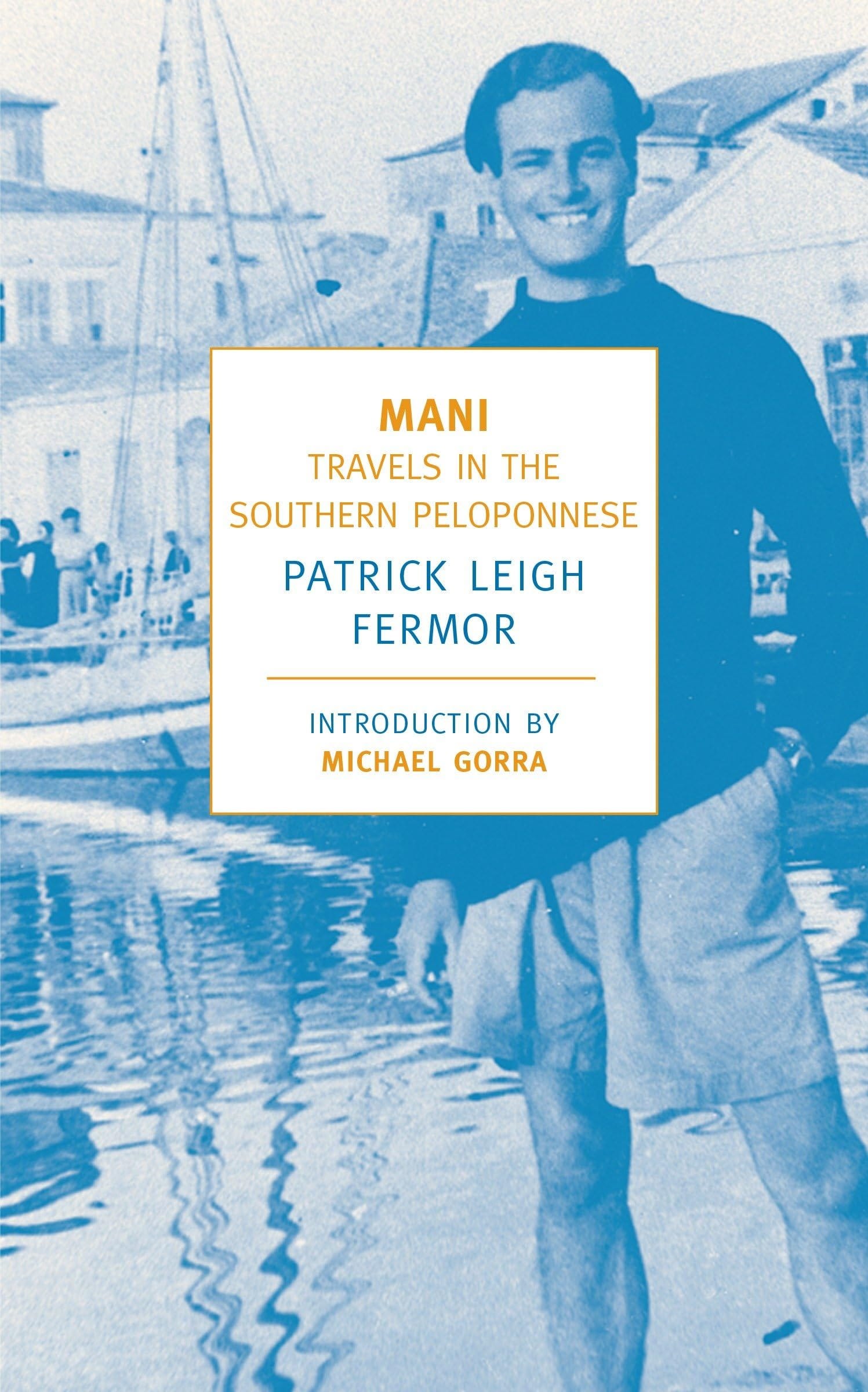
Mani: Travels in the Southern Peloponnese by Patrick Leigh Fermor —
Years ago, I read Patrick Leigh Fermor’s A Time of Gifts, his account of his walking tour as a young man from Holland to Istanbul, and fell in love with his prose. His two books about Greece, Mani and Roumeli, which I’m also bringing, are just about as good. In Mani, he travels to a remote and desolate peninsular at the Southern end of the Peloponnese famous for its fierce, independent denizens who resisted Ottoman rule from their stone towers. Leigh Fermor had a truly enviable life. During the war, he was Special Operations Executive commando on Nazi-occupied Crete, where he planned and executed a daring kidnap of a German general. He then went on to become probably the best travel writer of all time. Mani’s not quite the same location where I’m going but the picture on the cover shows Leigh Fermor on Ithaca, where I’ll likely go.
The Ionian Mission by Patrick O’Brian —
Another Anglo-Irish Patrick. My whole family are big fans of the Aubrey-Maturin maritime novels that take place during the Napoleonic wars. I’ve only read Master and Commander, the first novel in the series,, but I’ve watched the film adaptation with Russel Crowe many times. This one takes place in the Ionian islands so I had to bring it along. Kirkus Reviews writes, “[the heroes] sail to the Greek islands to tinker with the balance of power at the fringes of the Turkish empire. Splendid adventures at a stately pace.” Sounds fun.
Byron: The Last Journey April 1823-April 1824 by Harold Nicolson —
In 1823, Lord Byron sailed from Genoa to the Ionian sea with his friend the Italian nobleman Pietro Gamba. His plan was to assist the Greek rebels against the Ottomans with money and arms. It was to be his last voyage; he would die of an illness in Missolonghi. Harold Nicolson was a career diplomat in His Majesty’s Diplomatic Service and the husband of the more famous writer Vita Sackville-West, as well as being an author in his own right. Here’s how a review of the book in the Atlantic Monthly from 1924 begins:
Few and gifted are the biographers whose works vindicate their belief that the best good turn they can do a great man is to be sincere about him. Mr. Nicolson’s place in this small class is high. His Tennyson was a beautifully' sincere essay in salvage. So is his Byron. He sees Byron’s life not as ‘ a series of wasted opportunities’ but as ‘a catalogue of false positions,’ none falser than the last, at Missolonghi, where Byron went, foreseeing that he should be detected, exposed, as soon as events forced him to act like a man of action — the most ill-fitting of the many parts for which he had cast himself. Mr. Nicolson is of opinion that ‘Byron accomplished nothing at Missolonghi except his own suicide,’ and also, that by' that single act of heroism he secured the liberation of Greece.’ By sticking to his false position he achieved after his death more than his most extravagant well-wishers had expected of his journey.
A Narrative of Lord Byron’s Last Journey to Greece by Pietro Gamba —
For a less critical account, I’m also going to read Pietro Gamba’s journals on Byron’s last trip. Count Gamba was the brother of Byron’s lover Teresa Guiccioli. The aristocratic family had married off the 21 year-old Teresa to a much older man for political reasons, and, feeling guilty about it, they took an indulgent view of her affair with the poet, seeing it as a way to make it up to the young woman. Pietro became an adoring fan of Byron and his right-hand man for his last journey, but was apparently incompetent and unlucky, much to the exasperation of Byron. He got himself captured by a Turkish frigate with most of their supplies and weapons; Byron himself escaped narrowly. Here’s Byron writing of another mishap of his Italian friend: "Gamba—who is anything but lucky—had something to do with it—and as usual—the moment he had—matters went wrong.” I hope for better luck!
See you in a few weeks.—


